Betekenis waarschijnlijkheid ratio
Wat zegt de odds ratio? De odds ratio is de factor waarmee kansverhoudingen (de odds) verschillen. Een fictief voorbeeld: Stel dat Nederlandse mannen een kans van 20 procent hebben op haaruitval, en dus van 80 procent dat dit niet gebeurt. De kansverhouding op haaruitval is dan 20/80 = 0, Hoe bereken je het relatief risico?. De odds ratio is de verhouding tussen twee wedverhoudingen of odds. Daarbij is de wedverhouding de verhouding tussen de waarschijnlijkheid dat een gebeurtenis optreedt (zal optreden) en de waarschijnlijkheid dat ze niet optreedt (zal optreden). Zou bijvoorbeeld bij een positief testresultaat keer een ziekte B vastgesteld zijn en keer. Betekenis waarschijnlijkheid ratio Odds-ratio = (A*D) / (B*C) Het relatieve risico vertelt ons de verhouding tussen de waarschijnlijkheid dat een gebeurtenis zich voordoet in een behandelgroep en de waarschijnlijkheid dat een gebeurtenis zich voordoet in een controlegroep. Het wordt als volgt berekend.

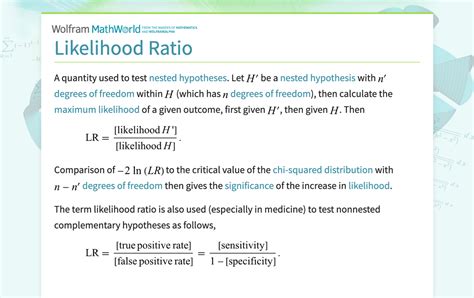


Likelihood ratio
Learn how to calculate and apply likelihood ratios for assessing the value of performing a diagnostic test. Likelihood ratios use the sensitivity and specificity of the test to determine whether a test result changes the probability of a condition. A hypothesis test that compares the goodness of fit of two statistical models based on the ratio of their likelihoods. Learn the definition, interpretation, examples, and asymptotic distribution of the likelihood-ratio test statistic. Likelihood ratio The Likelihood Ratio Test is a statistical method of testing the goodness of fit of two different nested statistical models using hypothesis testing. It is widely used in many industries for multiple reasons such as model comparison, hypothesis testing, variable selection, assessing model adequacy.Statistische significantie
Statistische significantie is een term die door onderzoekers wordt gebruikt om aan te geven dat het onwaarschijnlijk is dat hun resultaten op toeval gebaseerd zijn. Significantie wordt meestal aangeduid met een p-waarde (overschrijdingskans). Statistische significantie is enigszins willekeurig, omdat je zelf de drempelwaarde (alfa) kiest. An Easy Introduction to Statistical Significance (With Examples) Published on January 7, by Pritha d on June 22, If a result is statistically significant, that means it’s unlikely to be explained solely by chance or random factors.Statistische significantie Statistische significantie is de zekerheid dat een uitkomst het gevolg is van een specifieke oorzaak en niet van toeval. Als een geobserveerd resultaat in data statistisch significant is, houdt dit in dat de kans groot is dat een specifieke factor of omstandigheid de uitkomst veroorzaakt.